// Production / LLM Observability & Reliability
Canary and shadow for LLMs.
Prompt edits and model swaps look harmless until 8% of enterprise traces silently regress. We build shadow traffic, canary stages with statistical gates, and auto-rollback wired into your gateway, Ray Serve, Envoy, or LaunchDarkly.
// What we see
The smoke test passed. Customer success became the regression detector.
01
Five hand-picked prompts always pass
The smoke test is the same 50 prompts that worked at launch. The 8% of enterprise traces depending on long-range coherence aren't in it - customer success files the ticket.
02
Eyeballing 200 outputs isn't statistics
Stochastic outputs need paired bootstrap CIs and McNemar's. "Looks better to me" is how teams ship an upgrade that improves consumer traffic and degrades enterprise.
03
Without gates, rollbacks become after-hours emergencies
Without automated rollback armed on guardrail metrics, a regression discovered post-deploy means a manual revert under pressure, after hours.
// Case Study
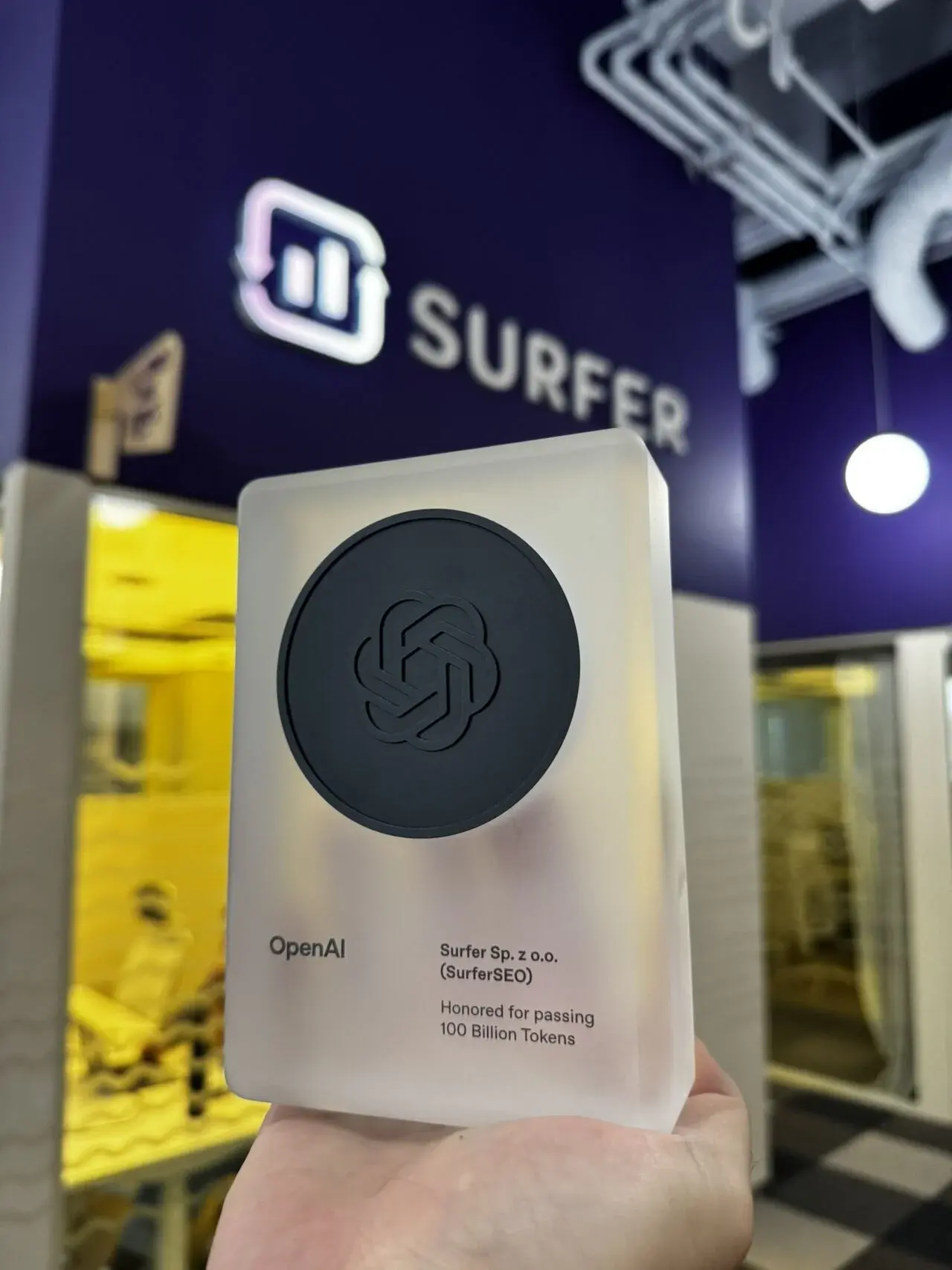
Production LLM Processing at Surfer Scale
We helped Surfer handle massive content generation workloads with a reliable, cost-optimized LLM pipeline built for scale.
300B+
tokens processed
100k+
credits sold in 6 months
5 months
from concept to full product release
// What we do
Three layers, from shadow to auto-rollback.
Mirror the candidate against real traffic. Stage the rollout with statistical gates. Auto-revert when a guardrail breaches. Built on top of the gateway, flag system, and CI you already run.
Shadow traffic + paired output capture
Every production request hits the candidate asynchronously, with no impact on baseline latency - real-distribution data before the canary starts.
- Async mirroring via Envoy / API gateway / Ray Serve
- Sample 5–100% of traffic with explicit cost controls
- Pre-canary signals - latency, error rate, output diff metrics
- Side-by-side output storage with prompt/model/version tagging
Staged canary with statistical gates
Traffic ramps 1% → 10% → 50% → 100% with explicit gates between stages, power-sized to detect the deltas you care about.
- Configurable stages, durations, and traffic percentages
- Win-rate eval with paired bootstrap CIs and McNemar's test
- Per-tenant + sticky-session canary for stateful agents and chat
- Feature flags via LaunchDarkly, Unleash, or built-in
Auto-rollback + traffic control
Guardrail breach triggers automated revert in under 30 seconds, with manual override for ambiguous regressions.
- Threshold-based triggers on quality, latency, error, refusal, safety
- Per-stage rollback policies and cooldown windows
- Kill switches that revert in under 30 seconds
- Slack / PagerDuty / Opsgenie postmortem-ready notification
// Method fit
Staged rollout machinery isn't the right move for every team.
skip it if
You ship LLM changes monthly or less
A smoke test on a couple hundred prompts plus a fast revert path is enough until changes ship weekly+.
You don't have evals yet
Canary gates need metrics. Without an eval framework scoring baseline vs candidate, there's nothing to decide on - start with the eval engagement.
Custom LLM Evaluation FrameworksYou're still pre-PMF and the system shape is changing
Rollout machinery for code rewritten next sprint is plumbing for nothing. Find product fit, then layer rollout discipline on what stabilizes.
use it if
You're shipping prompt or model changes weekly+ to a multi-tenant production system, real customers feel the regressions, and the smoke test is starting to feel like luck.
You already have evals (calibrated LLM-as-judge, golden sets from production) and want to wire them as canary gates rather than as a manual step someone runs before merging.
You've been burned by a vendor model update or a prompt edit that quietly degraded a segment, and you want the next one caught at the gate.
// How we work
Mirror first. Stage with stats. Auto-rollback wired in.
Every engagement starts with shadow mirroring so the team has data on the candidate before any user traffic touches it. Then the canary state machine. Then the rollback wiring and CI integration.
01
Wire shadow traffic and paired output capture
Async traffic mirroring via your gateway (Envoy, Ray Serve, API gateway) with side-by-side output storage and trace correlation. Pre-canary metrics wired into your dashboards. First shadow data within 1–2 weeks.
02
Build the canary state machine with statistical gates
Configurable stages (1% → 10% → 50% → 100%), power-sized for your traffic volume. Win-rate eval with paired bootstrap and McNemar's. Per-tenant + sticky-session routing. Feature flags via LaunchDarkly / Unleash or built-in.
03
Wire auto-rollback, integrate with CI, hand off the runbook
Guardrail-triggered revert under 30 seconds. PagerDuty/Opsgenie/Slack notifications with rollback context, audit logs on every decision. Runbook covers new gates, threshold tuning, and per-tenant overrides.

// Expert insight
“The hard part of LLM rollouts isn't the canary mechanics - it's deciding what "better" even means. A new prompt with a 3% higher win rate but a 0.5pp higher refusal rate on enterprise traffic isn't an improvement, it's a tradeoff. The framework has to make that tradeoff visible at the gate, before someone has to call a customer back.”
Karol Gawron
Head of R&D @ bards.ai
// Why bards.ai
Rollout gates from a team where paired statistics are a reflex.
Generic deploy machinery assumes deterministic outputs and clean conversion metrics - LLMs have neither. Stateless-API patterns miss the regression where 8% of enterprise tone subtly drifts.
1B+ tokens/day in production
Staged rollouts of prompts, model swaps, and pipeline changes on platforms serving real customers - not just internal tooling.
Statistics-first by training
Spun out of CLARIN-PL research. Power analysis, paired tests, bootstrap CIs, and McNemar's are reflexes, not afterthoughts.
Ray Serve + Envoy + LaunchDarkly fluency
We build the rollout layer on top of your gateway. Your SREs aren't asked to learn a new traffic system.
Eval-integrated by default
Canary gates are only as good as the metrics they read - we integrate calibrated LLM-as-judge, win-rate eval, and your existing observability stack.
On-prem & air-gapped capable
Rollout infrastructure that runs inside your perimeter - including environments where SaaS feature-flag vendors aren't an option.
Rollout scars on every engineer
Everyone here has staged prompt and model changes through canary gates - and armed the auto-rollback that caught a bad candidate.
// FAQ
Common questions about canary and shadow deployment
Traditional A/B assumes deterministic outputs and a clean conversion metric. LLMs are stochastic - the same prompt produces different outputs on retry - and your real quality metric is multi-dimensional (faithfulness, tone, refusal rate, latency). Our framework handles non-determinism via paired comparisons, treats quality as a vector not a scalar, and weights tradeoffs explicitly rather than collapsing everything to one number.
Three approaches, used together. Win-rate eval - score baseline vs candidate on the same input via calibrated LLM-as-judge with position swapping. Distributional metrics - compare refusal rate, hallucination rate, and tool-use accuracy across thousands of paired requests. Bootstrap confidence intervals on every metric so you know when a 1.5% delta is real and when it's noise. We size canary stages with power analysis to detect the effects you care about.
Configurable per route, but typically: any safety metric breach (refusal, prompt injection, policy violation), error rate above 2× baseline, p99 latency above budget for 5+ minutes, and quality metrics dropping more than a configured threshold with statistical significance. Anything ambiguous (small regression on one metric, gain on another) routes to a human review channel rather than auto-rolling back.
Procedurally similar, technically different. Prompt changes can ship faster - shorter shadow window, smaller canary durations - because the blast radius is bounded and the cost is just inference. Model swaps need a longer shadow phase to surface latency, cost, and tail-distribution shifts. Same framework, different default schedules and gate criteria.
Yes - that's standard. Enterprise customers usually start at 0% rollout while consumer traffic ramps to 100%, then we enable per-tenant after the consumer canary completes successfully. Sticky-session routing keeps individual users on a consistent variant for chat and agent workloads where mid-conversation flips would be disorienting.
Long enough to accumulate statistical power for your primary metric. For high-traffic routes (1M+ requests/day), 1–2 hours per stage is usually sufficient. For lower-traffic routes, stages can run 24–48 hours. The framework calculates required duration from your historical traffic shape and the minimum detectable effect you specify - and refuses to advance early.
We build on top of what you already run. If you have an API gateway (Envoy, Kong, AWS API Gateway), traffic splitting happens there. If you use LaunchDarkly or Unleash for flags, we wire into those. If you're on Ray Serve, we use its native traffic-shifting. The rollout state machine and metric gates are the part we add - the routing layer reuses your stack.
// Related services
Adjacent problems we solve
- Learn more
LLM Observability & Reliability
LLM Observability & Monitoring
Per-tenant cost attribution and streaming-aware latency (TTFT, inter-token) in the Grafana, Datadog, or Langfuse stack you already run.
- Learn more
LLM Observability & Reliability
Custom LLM Evaluation Frameworks
Golden sets built from your domain and LLM judges calibrated to 85-95% human agreement, wired into CI as a deploy gate.
- Learn more
LLM Observability & Reliability
LLM Regression Testing & Drift Detection
A prompt edit silently breaks 8% of traces. Diff-based paired evals and drift detection catch it before customer support does.
// Let's ship it
Ship LLM changes without praying it works.
Walk us through your current rollout process and where the last regression came from - a rollout architecture and a number come back within a business day.
Karol Gawron
Head of R&D @ bards.ai