// Production / LLM Observability & Reliability
OTel-native LLM observability.
OpenTelemetry GenAI conventions wired into the stack you already run - Prometheus, Grafana, Datadog, Langfuse, LangSmith, Phoenix. Per-tenant cost attribution, streaming-aware latency (TTFT, inter-token, total), and alerts that page the right on-call.
// What we see
When the bill doubles, the team finds out from finance - not the dashboard.
01
Cost attribution is a week of log diving
Finance asks which product line is burning the API budget - the answer takes three days of grepping invoices and request logs, after the spike is already billed.
02
Latency dashboards lie about user experience
Total request duration looks fine on Datadog while users complain the chat feels slow. TTFT, inter-token latency, and stalls between tokens are invisible until someone instruments them.
03
Cost spikes page the on-call after the fact
Provider quotas catch overruns at month-end. Real-time spike detection - rate-of-change against a rolling baseline - is something most teams add only after their first $20k surprise.
// Case Study
Production LLM Processing at Surfer Scale
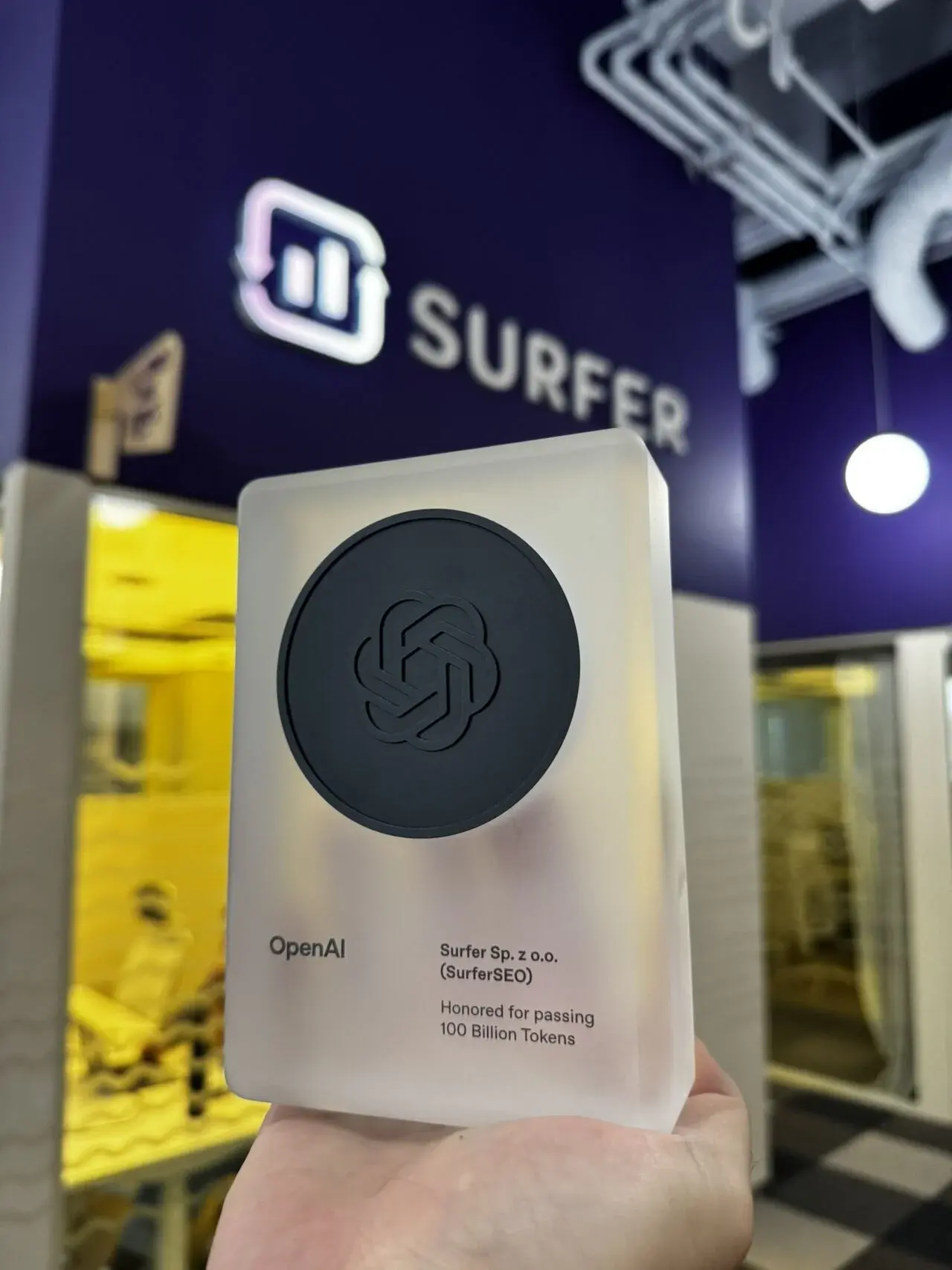
We helped Surfer handle massive content generation workloads with a reliable, cost-optimized LLM pipeline built for scale.
300B+
tokens processed
100k+
credits sold in 6 months
5 months
from concept to full product release
// What we do
Three layers, from instrument to act.
Telemetry stack built on OpenTelemetry GenAI conventions, wired into your existing Prometheus/Grafana/Datadog/Langfuse/LangSmith - never a parallel observability silo.
Instrument - OTel GenAI conventions
OTel semantic conventions (gen_ai.* spans) across every LLM call site, with distributed traces across RAG, agent, and tool-use pipelines.
- OTel auto-instrumentation for OpenAI, Anthropic, Bedrock, Gemini, vLLM, TGI
- Streaming-aware latency: TTFT, inter-token, tokens/sec, total p50/p95/p99
- Per-request labels: tenant, feature, route, model, model version, region
- Cardinality budgets - high-cardinality fields routed to traces, not metrics
Attribute - cost dashboards finance trusts
Real-time spend from inflight token counts, reconciled daily against provider invoices - per-tenant, per-feature, per-route attribution finance trusts.
- Real-time $/route + nightly invoice reconciliation (OpenAI, Anthropic, Bedrock)
- Cache hit-rate metrics - prompt caching, KV cache, semantic cache
- Per-tenant token + $ dashboards exported to Grafana / Datadog / Looker
- Cost per successful business outcome (definable per route)
Act - alerts and budget controls
Three-tier alerting: budget breaches page on-call, rate-of-change spikes go to Slack, month-end forecasts go to email.
- PagerDuty / Opsgenie / Slack routing on cost, latency, error, refusal signals
- Per-tenant $ + token budgets enforced at the gateway, audit-logged
- Tail-based trace sampling: 100% of errors + slow tails, 1–5% baseline
- Graceful degradation to smaller models on budget pressure
// Method fit
If you're running LLM in production without observability, you're flying blind.
skip it if
It's a toy or prototype with a tiny bill
Internal tool nobody uses, weekend hackathon, paper draft - fine, the provider's own dashboard is enough.
For anything with real users or real money flowing through it, treat observability as load-bearing.
use it if
Almost everything else. If real users hit the system or real money flows through it, you need this.
Most agencies sell "LLM integration" and skip the observability layer. That's how teams learn about cost spikes from finance and latency regressions from customer support.
We don't have a softer position. Wire OTel week one. Cost dashboards by week three. Alerts and budget controls by week six.
Without this layer you don't know what your system actually costs or what your users actually feel. You just haven't been told yet.
// How we work
Wire OTel first. Build the dashboards. Hand off the alerts.
Instrument the call sites, build the dashboards your team will actually open, then wire the alerts into the on-call you already run. Every step ships working before we move to the next.
01
Wire OTel instrumentation across LLM call sites
OTel GenAI conventions across OpenAI, Anthropic, Bedrock, Gemini, vLLM - every call site exporting gen_ai.* spans, connected to your trace backend (Tempo, Jaeger, Datadog, Honeycomb). First useful dashboards within 1–2 weeks.
02
Build cost attribution + latency dashboards
Per-tenant, per-route, per-model spend in real time, reconciled nightly against provider invoices. Streaming-aware latency (TTFT, inter-token, total) with p50/p95/p99 histograms. Dashboards-as-code, so they live in Git.
03
Wire alerts + budget controls, hand off the runbooks
Three-tier alerts routed through your existing PagerDuty/Opsgenie/Slack. Per-tenant budgets enforced at the gateway. We hand off the runbook for adding tenants and tuning alert thresholds.

// Expert insight
“Most teams treat observability as the cost of running production. The teams that pull ahead treat it as the moat. Six months of high-resolution traces - which prompts your users actually hit, which paths fail, where the long tail of edge cases lives - is an asset a competitor with the same API access can't shortcut. Model parity is the floor of the industry now. What you build on top of your trace store is what differentiates, and it only accumulates if you're capturing the data in the first place.”
Karol Gawron
Head of R&D @ bards.ai
// Why bards.ai
The telemetry we deploy is the telemetry we run on-call against.
Vendor support engineers sell tools. They can't define cost-per-outcome for your product, design a cardinality budget that won't blow up your TSDB, or set alert thresholds that ignore weekend dips.
OpenTelemetry-native by default
OTel GenAI conventions mean your telemetry isn't locked to one vendor's SDK. Swap Datadog for Honeycomb tomorrow - your data comes with you.
1B+ tokens/day instrumented in production
We built the cost-attribution and alerting layer behind a top-10 SEO product - the same patterns we run on-call against.
Prometheus + Grafana specialists
Dashboards-as-code, version-controlled alongside your platform. Cardinality budgets that don't surprise the SRE team. No more clicking around to recreate a panel.
Cross-tool fluency
Datadog LLM Observability, Langfuse, LangSmith, Phoenix, Helicone, New Relic - we know which tool fits which job and which trade-offs each one carries.
On-prem & air-gapped capable
Telemetry that stays inside your perimeter - for environments where SaaS observability vendors aren't an option. Self-hosted Langfuse + Prometheus stacks shipped end-to-end.
Engineers who've answered the pages
Everyone here has wired OTel pipelines, built the dashboards, and carried the on-call - on production LLM systems at 1B+ tokens/day.
// FAQ
Common questions about LLM observability
Whichever one you already run. Prometheus + Grafana, Datadog LLM Observability, New Relic - we instrument with OTel and ship to it. If you have nothing yet, the default we'd reach for is Langfuse or Phoenix for traces plus Prometheus + Grafana for metrics - both open-source and self-hostable. The point is the data, not the tool.
Tenants, users, and request IDs go to traces and logs - not metric labels. Metrics carry bounded dimensions: route, model, model version, tier, region. We define a cardinality budget upfront, monitor active series count, and alert when a new label is about to cost more than the metric is worth. High-cardinality questions get answered via trace queries or analytics warehouse, not Prometheus.
Tail-based sampling. Keep 100% of errors, slow requests (above p95), and 1–5% of normal traffic. For trace-based eval and debugging, we increase the rate per-tenant or per-route on demand. Metrics are never sampled - those are aggregated server-side and stay accurate.
Two layers. A real-time spend dashboard built from inflight token counts and posted prices, accurate to within a few percent. And a daily reconciliation job that pulls actual provider invoices (OpenAI, Anthropic, Bedrock) and compares them line-by-line to our metered numbers - discrepancies trigger an alert. Finance gets numbers that match the invoice; engineering gets numbers that update in seconds.
Yes - vLLM, TGI, TensorRT-LLM, Ray Serve, and custom inference servers with the same OTel conventions. KV-cache hit rate, batch utilization, queue depth, GPU utilization - all surfaced alongside the API-side cost metrics for a unified picture across self-hosted and vendor models.
Three signals layered. Absolute thresholds (per-tenant budget breach), rate-of-change (spend velocity vs rolling 7-day baseline), and predictive (forecasted month-end spend at current rate). Each tier routes differently - predictive goes to email and Slack; absolute breaches page on-call. Combined, they catch real spikes within 5–15 minutes without firing on weekend traffic dips.
First useful dashboards in 1–2 weeks for a single application. Full instrumentation rollout across multiple services with budgets, alerts, and trace integration usually lands in 4–6 weeks. We work in increments - the per-route latency dashboard ships before the cost-attribution one, so the team gets value while the deeper integration progresses.
// Related services
Adjacent problems we solve
- Learn more
LLM Observability & Reliability
Custom LLM Evaluation Frameworks
Golden sets built from your domain and LLM judges calibrated to 85-95% human agreement, wired into CI as a deploy gate.
- Learn more
LLM Observability & Reliability
LLM Regression Testing & Drift Detection
A prompt edit silently breaks 8% of traces. Diff-based paired evals and drift detection catch it before customer support does.
- Learn more
LLM Observability & Reliability
LLM Canary & Shadow Deployment
Shadow traffic, canary stages with statistical gates, and auto-rollback - a bad prompt change reverts in 30 seconds.
// Let's ship it
See your LLM workload before your CFO does.
Which questions about your LLM spend can't you answer today? Send them with your stack - we'll return an instrumentation plan and a number within a business day.
Karol Gawron
Head of R&D @ bards.ai