// Research / Computer Vision
Medical AI& imaging computer vision, built as medical device software.
Radiology, pathology, ophthalmology, dermatology - DICOM-native pipelines, GPU-resident training that doesn't starve on volumetric data, validation methodology a medical journal would publish, and a deploy posture that runs inside the hospital VLAN.
// What we see
The model is the easy part. The pipeline, the validation, and the audit trail are the work.
01
GPUs starving on a CPU dataloader
Volumetric CT/MRI pipelines that re-read NIfTI every epoch and augment on the CPU end up with GPUs at <30% utilization and iteration loops measured in days.
02
Validation that doesn't survive a second hospital
Most published medical CV results don't generalize across sites - different scanners, demographics, prevalence. The first external-validation run is where the AUROC drops 15 points and the regulatory plan unravels.
03
A regulatory pathway retrofitted at audit time
Models trained without frozen weights, build provenance, per-cohort breakdowns, or IEC 62304 traceability. Making it audit-ready after the fact is ~3× the work of doing it right the first time.
// Case Study
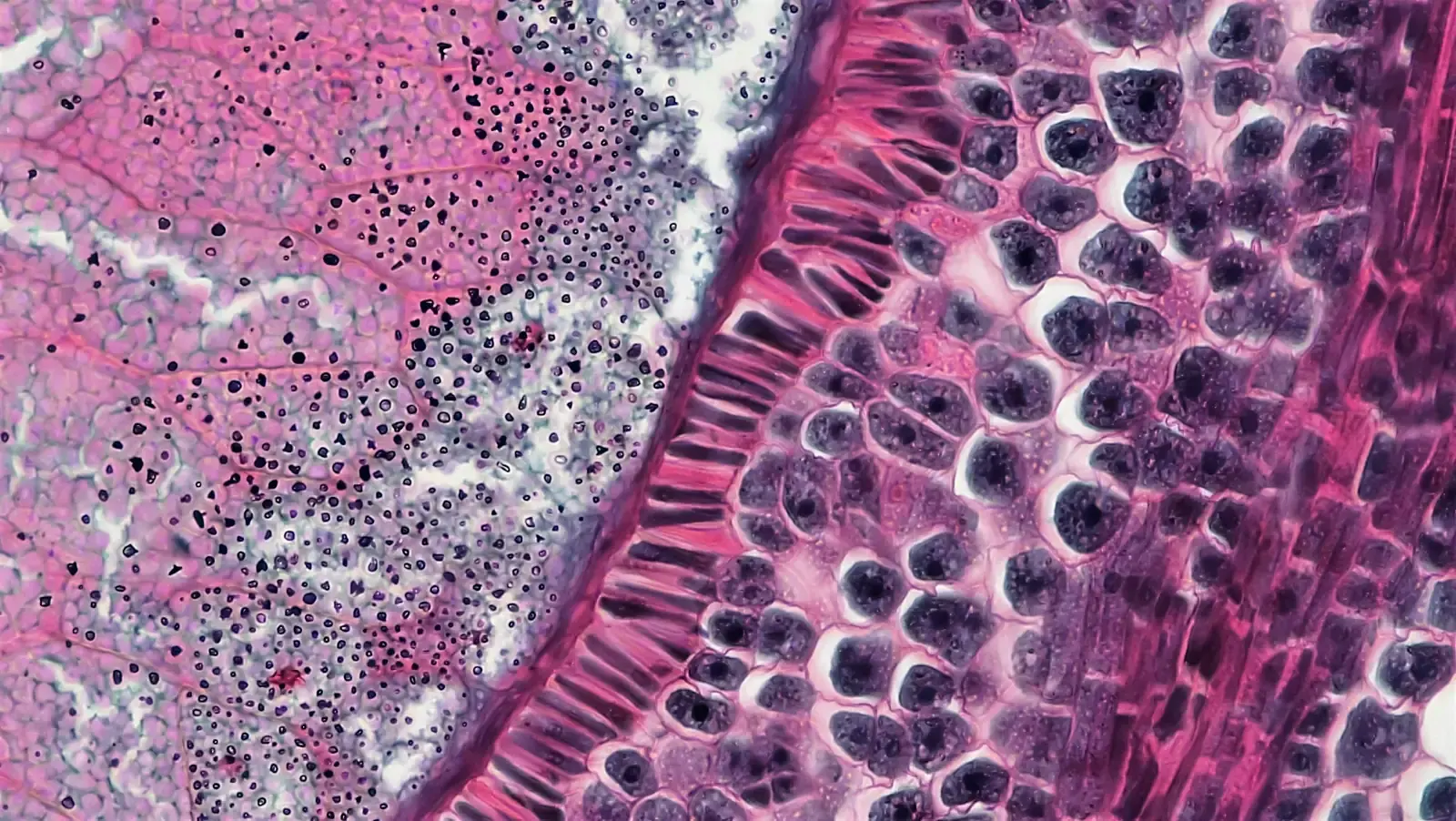
Trained a Gleason grading + tumor-segmentation model on full-resolution prostate WSI
We trained the Gleason grading + tumor-segmentation model - gland-level Gleason pattern classification plus pixel-level cancer segmentation on gigapixel H&E prostate biopsies - for a seed-stage medical imaging startup. The GPUs on their 8×A100 box were idling at <30% under an OpenSlide dataloader and CPU tile augmentation, so we rebuilt the data path GPU-native (Zarr-backed pyramidal tiles, cuCIM preprocessing and stain normalization on-device, Kornia augmentation in the same memory). Single-epoch wallclock collapsed from ~9h to ~50m, GPU utilization went from sub-30% to >90%, and the iteration loop finally caught up with the pathologists' labeling cadence.
9h → ~50m
single-epoch wallclock
>90%
GPU utilization (was <30%)
On-prem
no PHI egress, hospital VLAN
// What we do
Three things that do most of the work.
GPU-native pipelines so the training loop isn't I/O-bound. Validation methodology mapped to the clinical question, not a Kaggle leaderboard. A deploy and audit posture that lands inside the hospital VLAN.
GPU-native data pipelines for volumetric imaging
The whole data path lives on the GPU - training throughput typically lifts 5–10× on the same hardware.
- Zarr + Blosc/Zstd content-addressed chunked stores, sized to the patch geometry
- cuCIM for HU windowing, isotropic resampling, body-mask, normalization on-device
- Kornia 3D affine + elastic + intensity augmentation in GPU memory
- Reproducible from run config + dataset hash
Validation methodology that matches the clinical question
The validation study designed before training - numbers a medical journal would publish.
- Reader studies vs. board-certified specialists with statistical power calculated upfront
- Multi-site held-out evaluation; per-scanner / per-cohort drift reported by default
- Prevalence-adjusted PPV and decision-curve analysis at clinical operating points
- Calibration analysis - Brier score, reliability diagrams, temperature scaling where needed
Hospital-VLAN deploy + SaMD-aligned audit trail
PACS-integrated deploy inside the hospital VLAN, with the audit trail built in from day one.
- DICOM-native ingest and DICOM SR output for PACS-integrated reporting
- On-prem / air-gapped capable: signed bundles, offline registries, no outbound traffic
- Frozen-model release with bit-exact reproducibility and signed weight provenance
- IEC 62304 / ISO 13485 lifecycle traceability, submission-ready
// Method fit
Medical CV is the right move when the regulatory and clinical bar are part of the brief.
skip it if
You only need a research prototype
For a research result on a public dataset, a single ML engineer with MONAI and a notebook is faster and cheaper.
The use case isn't medical-specific
Generic object detection, OCR, or visual QA don't need DICOM, IEC 62304, or reader studies. Skip the regulatory tax.
Object DetectionYou can't get clinical data or a clinical site partner
Medical CV without real DICOM data and a validation site is shadow-boxing. We'll help structure data-sharing agreements and IRB submissions.
use it if
You're building a clinical product (SaMD or close to it) and the regulatory pathway - FDA 510(k) / De Novo, EU MDR Class IIa/IIb - is part of the brief.
You have, or can get, real clinical data through a hospital partner or research collaboration, and at least one site for external validation.
Deployment is on-prem or in a customer-controlled VPC, and your customers expect clinical data to stay in their network.
// How we work
Validation plan first. GPU-native pipeline second. Then train.
Most failed medical CV engagements failed before the first epoch - validation methodology unclear, data path I/O-bound, regulatory posture retrofitted at the end. We invert the order.
01
Validation plan + clinical question lock
Validation study agreed with clinical lead and regulatory team before any model work - operating points, sensitivity/specificity targets, prevalence assumptions, statistical power, reader-study design. The plan becomes the spec.
02
GPU-native pipeline + first training run
Zarr build of the curated cohort, cuCIM preprocessing on-device, Kornia 3D augmentation in GPU memory. Dataloader latency measured before any learning-rate sweep - <30% GPU utilization becomes >90%.
03
Validation, freeze, hand-off with audit trail
Multi-site validation, calibration analysis, reader-study comparison. On pass: weights frozen, build provenance recorded, release bundled. Handoff: Zarr build script, cuCIM/Kornia config, W&B project, validation harness, retraining runbook.

// Expert insight
“The dirty secret of medical CV is that 80 percent of published results don't generalize across hospitals - different scanners, different demographics, different prevalence. The work that matters is the validation methodology, the data path, and the audit trail. The model architecture is a footnote.”
Karol Gawron
Head of R&D @ bards.ai
// Why bards.ai
Hospital IT speaks DICOM. So do we.
Academic publications meet hospital deployments. We bridge the gap between a research result and a clinically usable tool - and we own every layer from DICOM ingest to the regulatory artifact.
Peer-reviewed medical CV background
Founded out of CLARIN-PL academic research. Statistical rigor, validation methodology, and reader-study design are in our DNA.
GPU-native pipelines, not CPU dataloaders
Zarr / cuCIM / Kornia in the standard kit. Customer pipelines taken from <30% GPU utilization to >90% on the same hardware - 5–10× throughput.
DICOM, PACS, HL7 / FHIR fluency
We speak C-STORE, C-FIND, DICOM SR, and the operational language of hospital IT. PACS-integrated reporting lands in the radiologist's worklist.
On-prem and air-gapped capable
We've deployed CV inside hospital networks that block outbound traffic. Signed install bundles, offline registries, no PHI egress, no cloud dependency.
SaMD / IEC 62304 / EU MDR alignment
Frozen weights, build provenance, lifecycle traceability, per-cohort validation reports - every artifact the regulatory team needs to write the 510(k).
Federated training when data can't move
FedAvg / FedProx with secure aggregation and differential privacy, per-site domain adaptation for scanner heterogeneity. Used where data-sharing agreements weren't workable.
// FAQ
Common questions about medical-grade CV
We don't act as the regulatory submitter - that's typically your medical-device team or a specialized RA consultancy. What we do is build every artifact your RA team needs: validation reports, software lifecycle documentation aligned with IEC 62304, risk analysis inputs, and frozen-model release records. We've supported customers through 510(k), De Novo, and EU MDR Class IIa/IIb pathways.
Reader studies against board-certified specialists, multi-site held-out validation, calibration analysis, and per-cohort performance breakdowns. We design the validation study before we train, with statistical power calculated against clinically meaningful effect sizes - so the result is publishable and submission-ready, not a notebook plot.
MONAI's default dataloader is CPU-bound for volumetric data - for many engagements that's fine, for high-volume training on full-resolution CT/MRI it isn't. Zarr gives you constant-time random patch reads and parallel-safe access; cuCIM moves preprocessing onto the GPU; Kornia does the same for 3D augmentation. We use MONAI's transforms when they fit and replace the dataloader when the GPU is starving - it's not an either/or.
We have ongoing collaborations with Polish university hospitals and clinical research centers, and we work with customers' clinical-site networks for cross-site validation. For greenfield projects without an existing site network, we help structure data-sharing agreements and IRB submissions.
Almost always on-prem or in a customer-controlled VPC for clinical deployments. PHI doesn't leave the hospital network. The model runs on customer GPUs (or a small dedicated appliance), integrated with PACS via DICOM listeners. Cloud is a fit only when the customer has already made that compliance decision themselves.
Once a model is validated and submitted, it's frozen - full bit-exact reproducibility, signed weights, signed Docker images, and a build provenance record. Improvements ship as new validated versions through the same release process, not as silent updates. This is non-negotiable for SaMD compliance.
Yes - federated learning is part of our toolkit. We use FedAvg / FedProx with secure aggregation and optional differential privacy, plus per-site domain adaptation to handle scanner heterogeneity. We've done this for cross-hospital training where data-sharing agreements weren't workable.
CT, MRI, X-ray (chest, mammography), pathology whole-slide imaging, OCT, fundus photography, and dermoscopy. The common thread is DICOM-native or vendor-formatted inputs, careful preprocessing, and validation methodology adapted to the modality's prevalence and decision context.
// Related services
Adjacent problems we solve
- Learn more
Computer Vision
Document AI & OCR Pipelines
Layout-aware extraction, line-item invoice parsing, and handwriting - 98% field accuracy at under 300ms per page, deployable in your VPC.
- Learn more
Computer Vision
Custom Object Detection & Segmentation
Detectors for your objects, viewpoints, and occlusions, labeled with foundation-model loops - 0.91 mAP on an A100 or 30 FPS on a Jetson.
- Learn more
Computer Vision
Liveness Detection & Biometric Authentication
ISO 30107-3 passive liveness and face verification - over 99% attack rejection at 1-3% false rejection, on-device or server-side.
// Let's ship it
Ship CV that holds up to a regulator and a radiologist.
You'll get a validation plan, a pipeline design, and a delivery roadmap within a business day. We need the modality, the clinical use case, and the target pathway.
Karol Gawron
Head of R&D @ bards.ai