01 · Tourism information is fragmented; safety information has to be authoritative
The Challenge
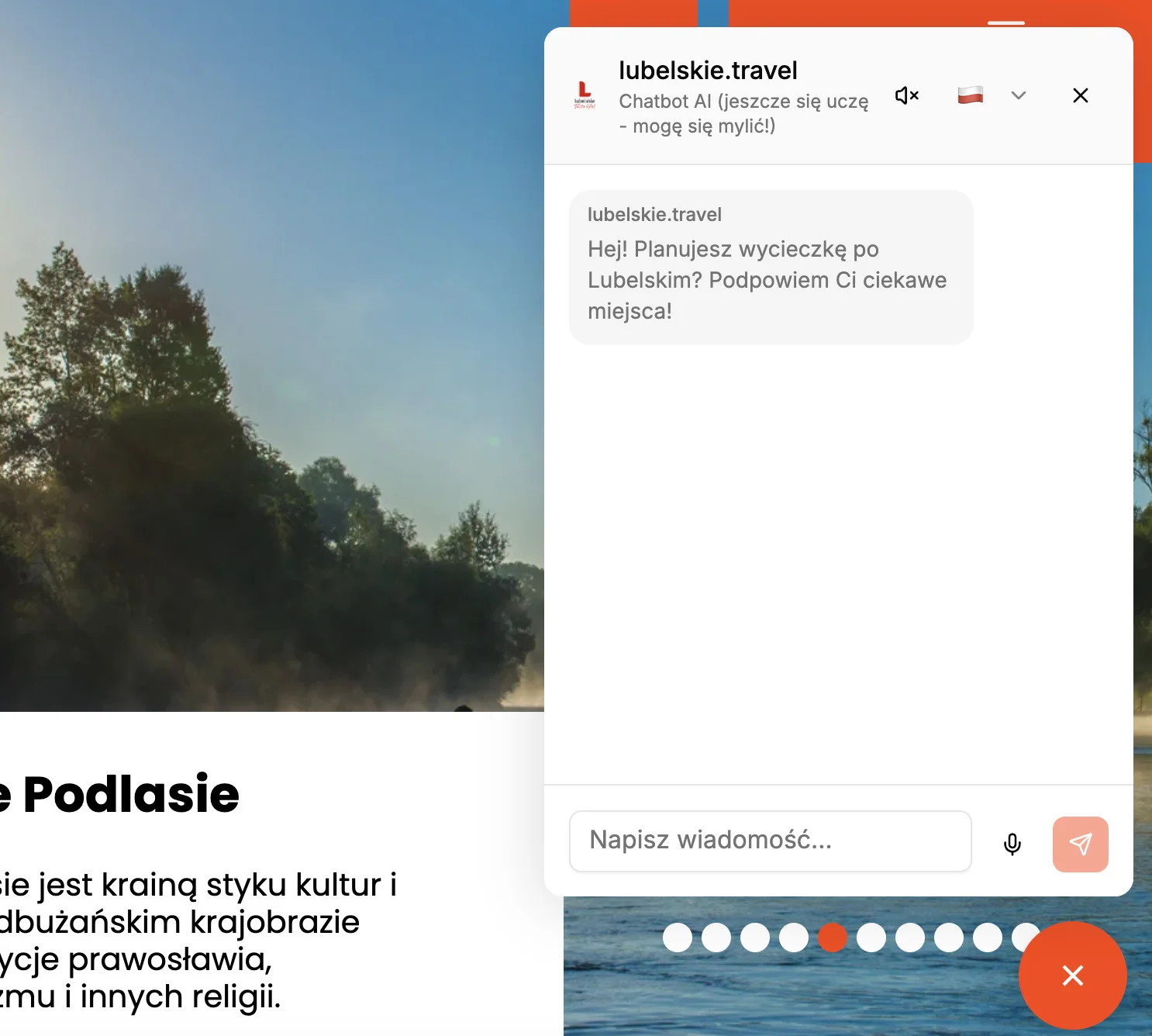
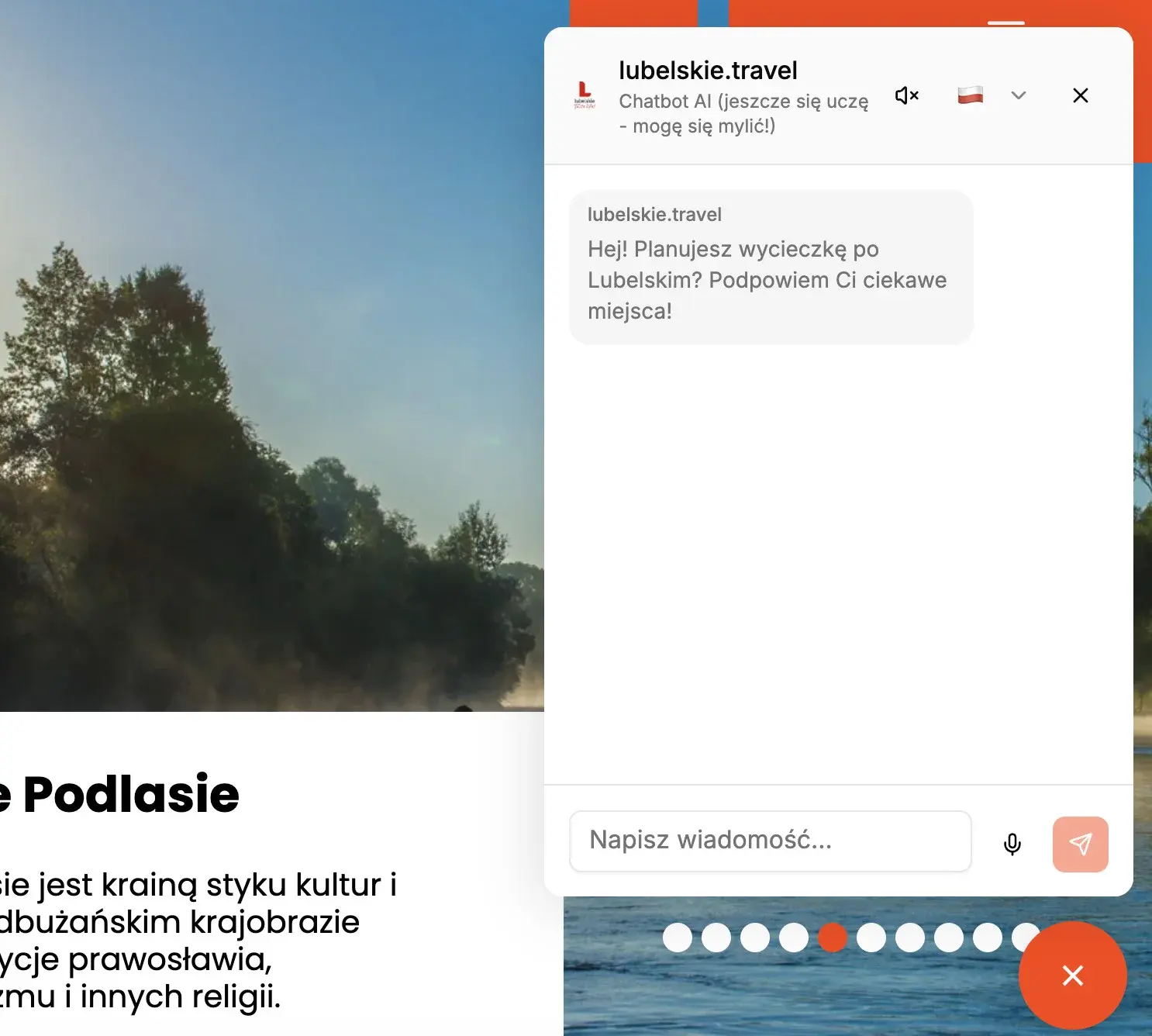
The Lubelskie Voivodeship is a ~2.1M-resident region in eastern Poland with cross-border tourism from Ukraine and Belarus and visitors arriving in dozens of languages. Their official tourism portal - lubelskie.travel - sits on top of a sprawling set of knowledge sources: points of interest, museums, accommodation, events, transport, regional cuisine, hiking and water-tourism routes. A visitor's question ("weekend in Roztocze with kids, where to stay and where to eat?") doesn't have a single source of truth - it spans five.
On top of the tourism layer there's a second, harder requirement. A regional-government tourism portal can't pretend that civil safety doesn't exist. Hazardous weather, fire warnings, road closures, and flood alerts are issued by Poland's RCB (Rządowe Centrum Bezpieczeństwa) - the government crisis-management center - and a tourist asking "is it safe to visit Roztocze this weekend?" needs an answer that reflects the actual RCB feed at that moment, not a frozen FAQ.
Three constraints shaped the build. The agent had to serve visitors in 30+ languages, because that's the language spectrum the portal actually sees in practice. It had to be cheap to run at the volume an inbound-tourism portal handles - every Złoty per message matters when budgets are public. And it had to pass a guardrails bar a public-sector procurement team would actually sign off on: no hallucinated POIs, no off-topic answers, no inappropriate output reflecting back on a regional-government brand.